
Benicàssim · 20–21 July 2012
Guns N’ Roses in Benicàssim: three hours of anticipation and debate
3 min · An independent festival keepsake
Julio Valverde was trying to reach the centre, and it was proving difficult. Reporting from the Guns N’ Roses audience for Radio 3, he described glowing phones and a dense crowd. The surviving connection from Costa de Fuego’s Friday has that particular quality: the night’s biggest name appears through someone trying to find a place among the attendees.
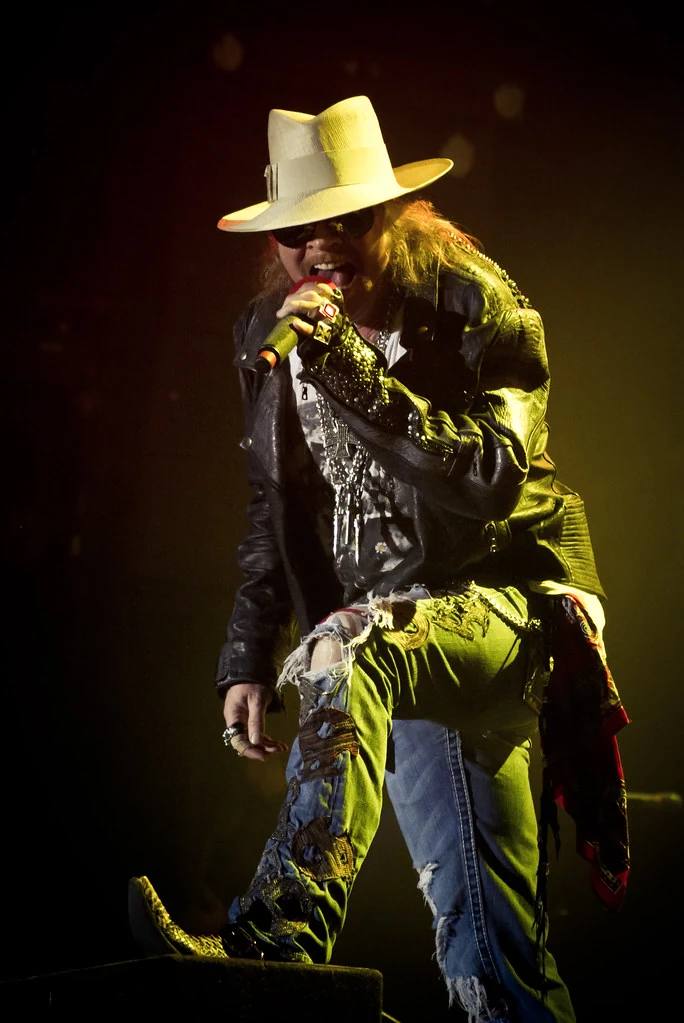
Axl Rose’s band topped the bill on 20 July 2012. Their appearance was one of the events around which the inaugural festival had been built, but the advertised start moved between advance publications. Following that sequence helps explain the wait without automatically attributing every change on paper to the singer arriving late.
The start time has a history too
On 16 July, Metaltrip published a schedule placing Guns N’ Roses at 23:20 and Obús at 02:50. RafaBasa’s guide on the 20th offered a different arrangement: Obús at 23:20 and Guns N’ Roses at 01:00. The blog Metal Idiota recorded two amendments it attributed to the festival, the last placing Obús at 23:05 and Guns N’ Roses at 00:50.
Albä Meiga’s account for Música ¡Sí! puts the observed start at around 00:50 and estimates a performance of roughly three hours. The radio had also announced that time during the wait. These are different kinds of evidence: versions of a programme, an on-air announcement and an attendee’s written recollection. Together, they locate the night more carefully than a single time presented as definitive.
Once Guns N’ Roses began, the festival continued along other routes. Radio 3 placed Lacuna Coil at Black Bikini and recalled Paradise Lost’s earlier appearance there.
The concert the radio described
The presenters explained that they did not have permission to broadcast the performance. Valverde went to report what he could see, while the programme found music in other recordings. Radio 3’s archive consequently preserves valuable information about the show without containing its musical broadcast.
The phones offer a specific view of the anticipation. They are neither an attendance count nor proof that everyone on site was there. The reporter was observing from his position, struggling to move forward. The image belongs to that journey.
The written criticism followed a less even course. In Musicazul, Alfredo Rodríguez highlighted the response to songs such as Sweet Child O’ Mine, November Rain and Don’t Cry, alongside his assessment of the musicians’ work. He also found the solos lengthy and the Chinese Democracy material less persuasive. His account moves between the weight of familiar songs and the shape of the show in front of him.
Albä Meiga also expressed reservations. That reception offers something more interesting than absolute approval or rejection: a concert in which memories of the band shaped the experience of its present. Critics could appreciate one passage and lose interest in another while still recognising the scale of the occasion.
The roughly three hours described in Música ¡Sí! contain that disagreement. Revisiting Guns N’ Roses in Benicàssim means keeping both the phones Valverde saw and the objections written afterwards. Anticipation brought people to the stage; what happened there left more than one interpretation.

Sources behind this story
- Radio 3 · 20 July 2012 · 01:21:54–01:22:19; 02:59:17–03:00:08; 03:23:10–03:24:24
- Musicazul · Alfredo Rodríguez
- Música ¡Sí! · Albä Meiga · 30.07.2012
- Metaltrip · 16.07.2012
- RafaBasa · 20.07.2012
- Metal Idiota · 19.07.2012